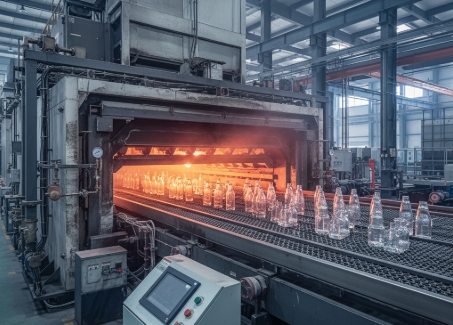
In the glass manufacturing industry, the annealing process plays a vital role in improving the strength, reducing internal stresses, and enhancing the durability of glass products. A wire mesh belt for glass annealing furnace is a critical component that ensures smooth and efficient processing, allowing glass sheets, containers, and panels to be transported uniformly through high-temperature environments.
✅ What is a Wire Mesh Belt for Glass Annealing Furnace?
A wire mesh belt designed for glass annealing furnaces is a high-performance conveyor belt constructed from heat-resistant stainless steel wires. It serves as the base on which glass products are loaded and transported through the annealing zone, where controlled heating and cooling processes are applied to strengthen the material and remove thermal stress.
✅ Why Wire Mesh Belts are Ideal for Glass Annealing Furnaces
Heat Resistance
These belts are made of stainless steel grades such as 310, 316, or other specialized alloys that withstand extreme temperatures ranging from 500°C to over 800°C without warping or degrading.Uniform Support
The woven mesh structure ensures that glass sheets are supported evenly, reducing the risk of breakage or deformation during the annealing process.Thermal Expansion Handling
The flexible yet robust mesh accommodates slight expansions and contractions that occur under fluctuating furnace temperatures, preventing mechanical strain or misalignment.Corrosion and Oxidation Resistance
High-grade stainless steel belts resist oxidation, corrosion, and chemical interactions that may occur during high-temperature processes, ensuring long-term durability.Excellent Drainage and Cooling
The open mesh design allows controlled airflow, heat dissipation, and uniform cooling, which are essential for achieving consistent annealing results.Minimal Maintenance
Wire mesh belts require little maintenance compared to solid or roller conveyors. Their open structure also facilitates easier cleaning and inspection.
✅ Applications in Glass Annealing
Wire mesh belts are widely used in:
Annealing furnaces for flat glass sheets
Bottle and container manufacturing lines
Glass panel tempering systems
Specialty glass products requiring precise thermal treatment
The belt’s strength and heat resistance make it suitable for continuous operation in demanding industrial environments.
✅ Advantages Over Alternative Conveyor Systems
| Feature | Wire Mesh Belt | Solid or Roller Conveyor |
|---|---|---|
| Heat resistance | Excellent | Limited |
| Uniform support | High | Uneven |
| Thermal expansion handling | Flexible | Rigid |
| Cooling efficiency | Superior | Poor |
| Maintenance | Low | High |
| Durability | Long-lasting | Moderate |
✅ Choosing the Right Wire Mesh Belt for Your Furnace
When selecting a wire mesh belt for glass annealing, keep the following in mind:
✔ Material selection – Use heat-resistant stainless steel, such as grades 310 or 316, depending on operating temperatures
✔ Mesh design – Choose the appropriate wire diameter and opening size to support glass sheets without compromising airflow
✔ Load capacity – Ensure the belt can handle the weight of glass products at full load without deformation
✔ Belt width & length – Customize according to furnace size and production volume
✔ Corrosion resistance – Evaluate chemical exposure and choose alloys accordingly
✔ Ease of maintenance – Consider belts that allow for inspection and cleaning without downtime
✅ Maintenance and Safety Tips
Regularly inspect the belt for signs of wear, cracking, or corrosion
Ensure alignment and tension are maintained to avoid skewing or breakage
Use food-grade lubricants if applicable, or consult material safety standards
Clean the belt periodically to prevent buildup that could affect airflow or heat distribution
Implement strict safety protocols when handling or replacing belts in high-temperature environments
✅ Conclusion
A wire mesh belt for glass annealing furnace is an indispensable tool in ensuring consistent, high-quality glass products while improving efficiency and reducing downtime. Its combination of heat resistance, flexibility, and durability makes it the ideal choice for harsh industrial environments. By choosing the right mesh design and material, manufacturers can enhance their annealing processes, minimize breakage, and achieve superior glass strength.
For glass manufacturers aiming to optimize their annealing operations, investing in a well-designed wire mesh belt is key to long-term success.